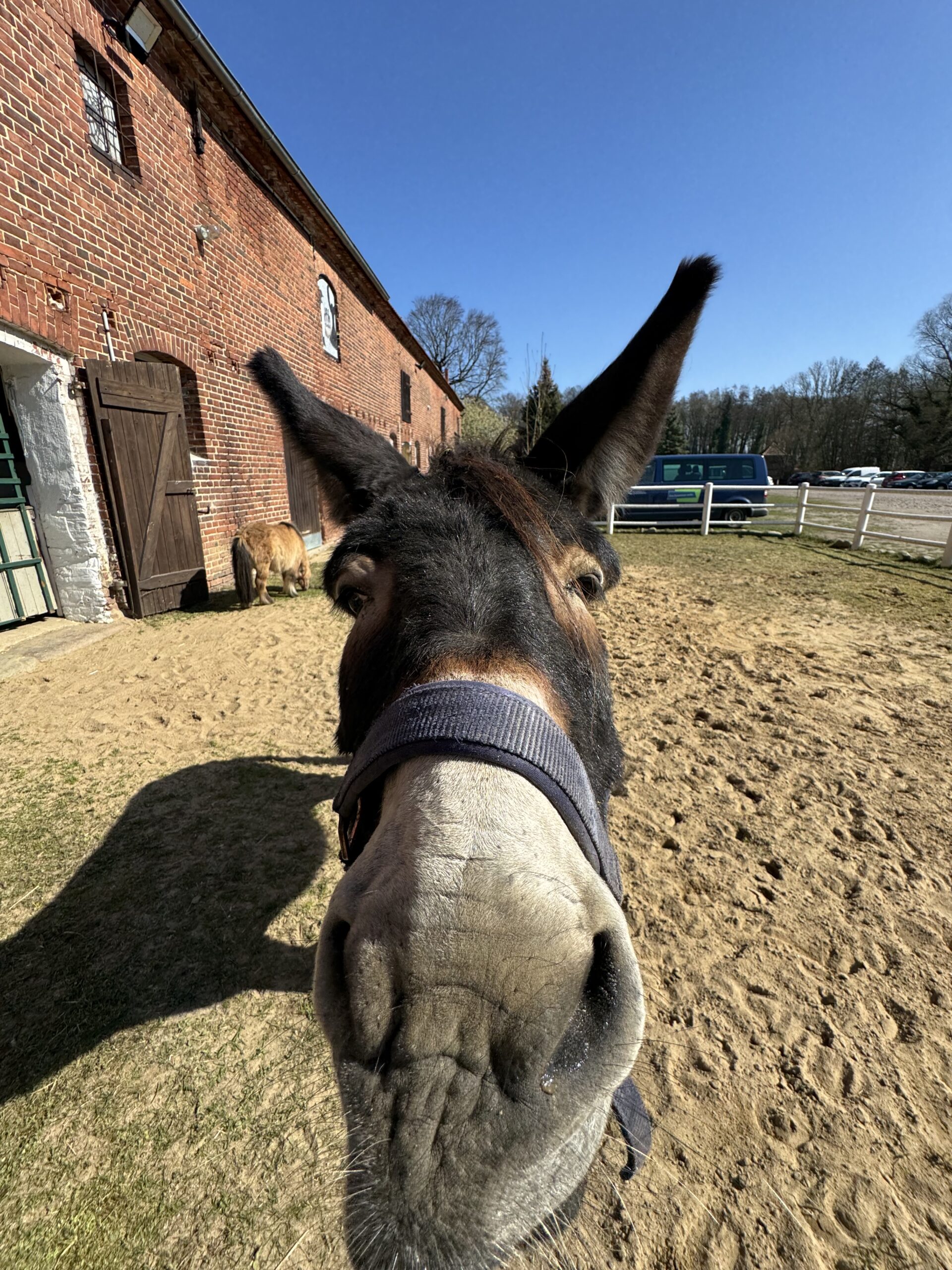
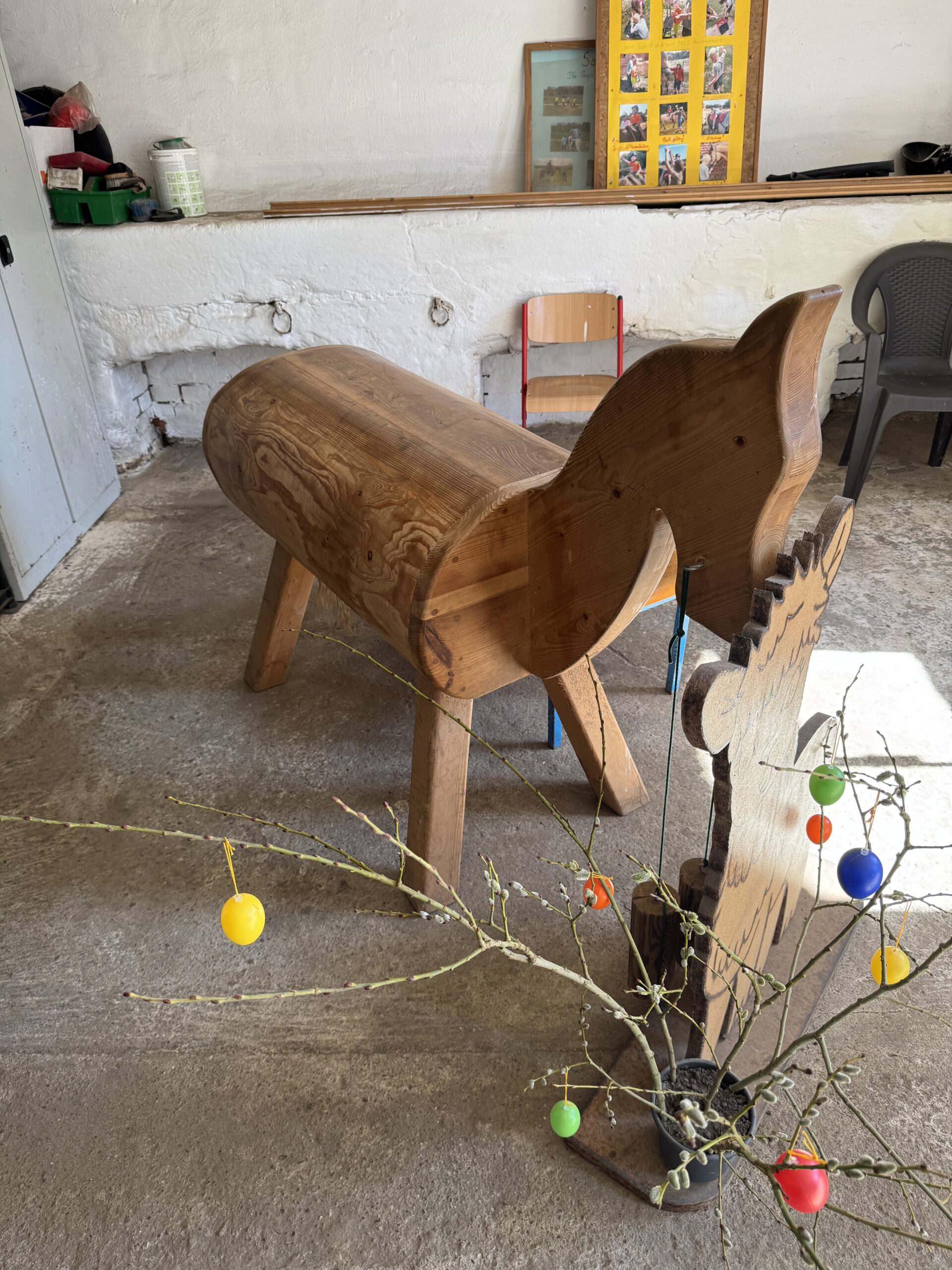
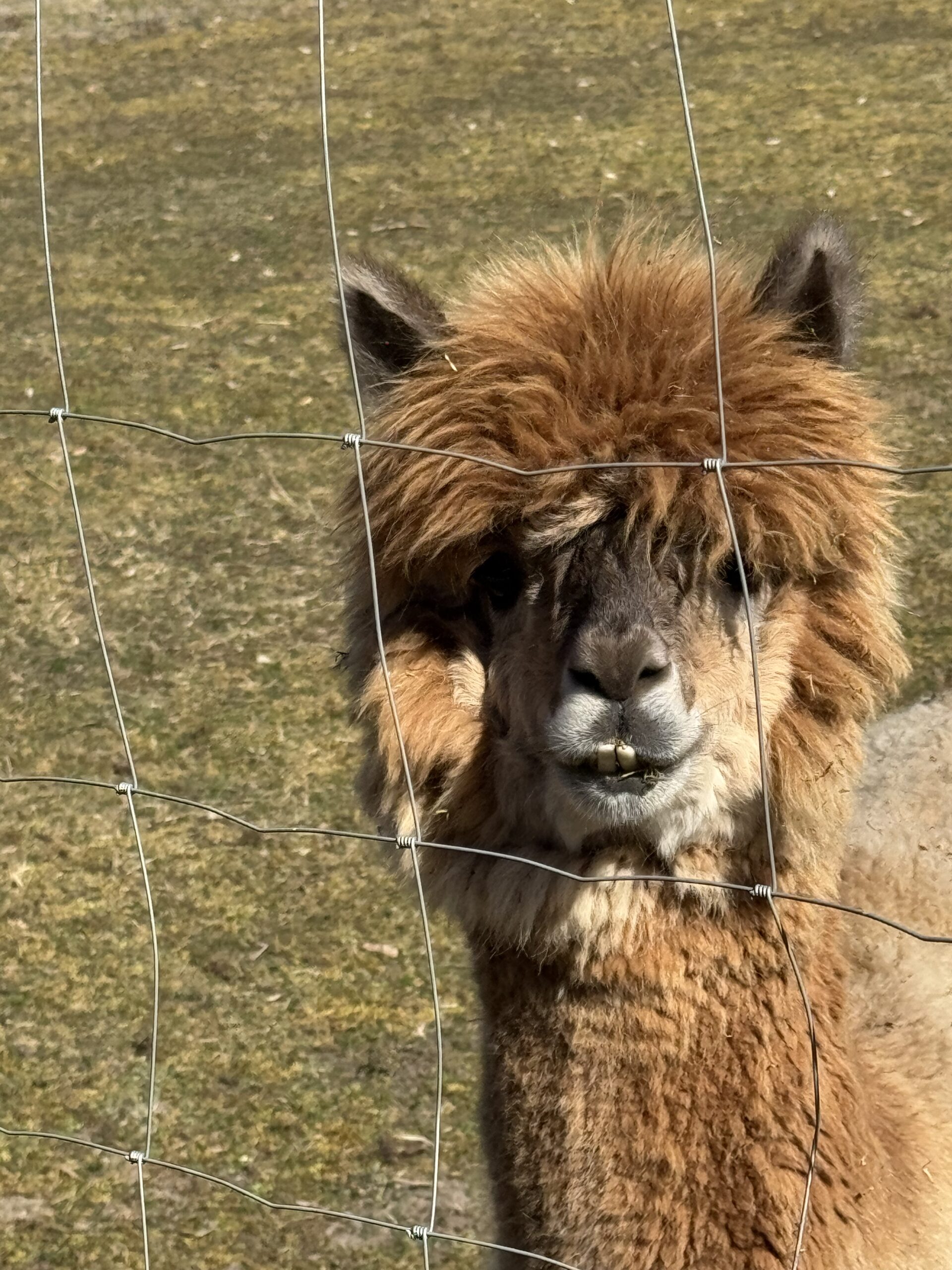
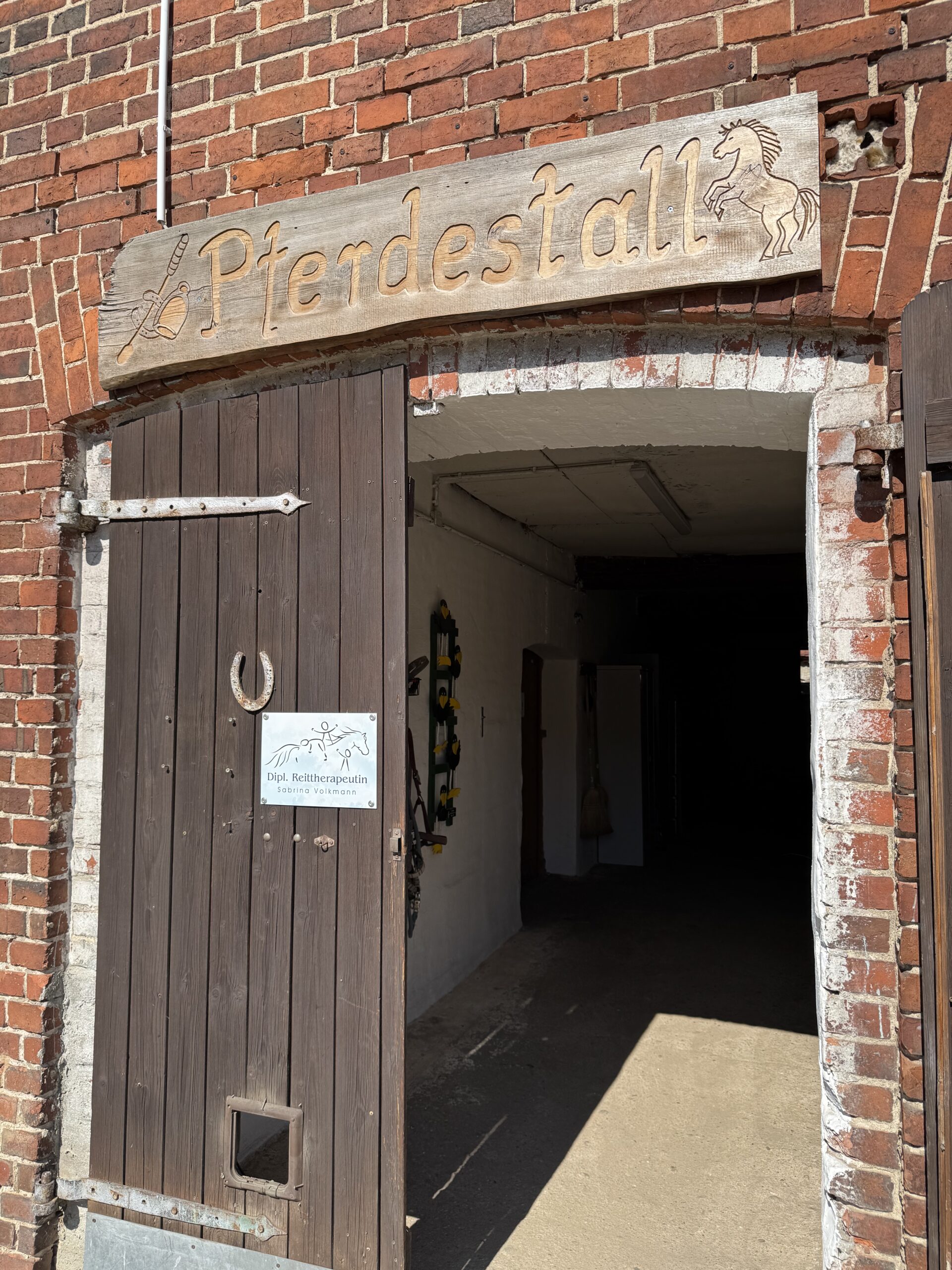
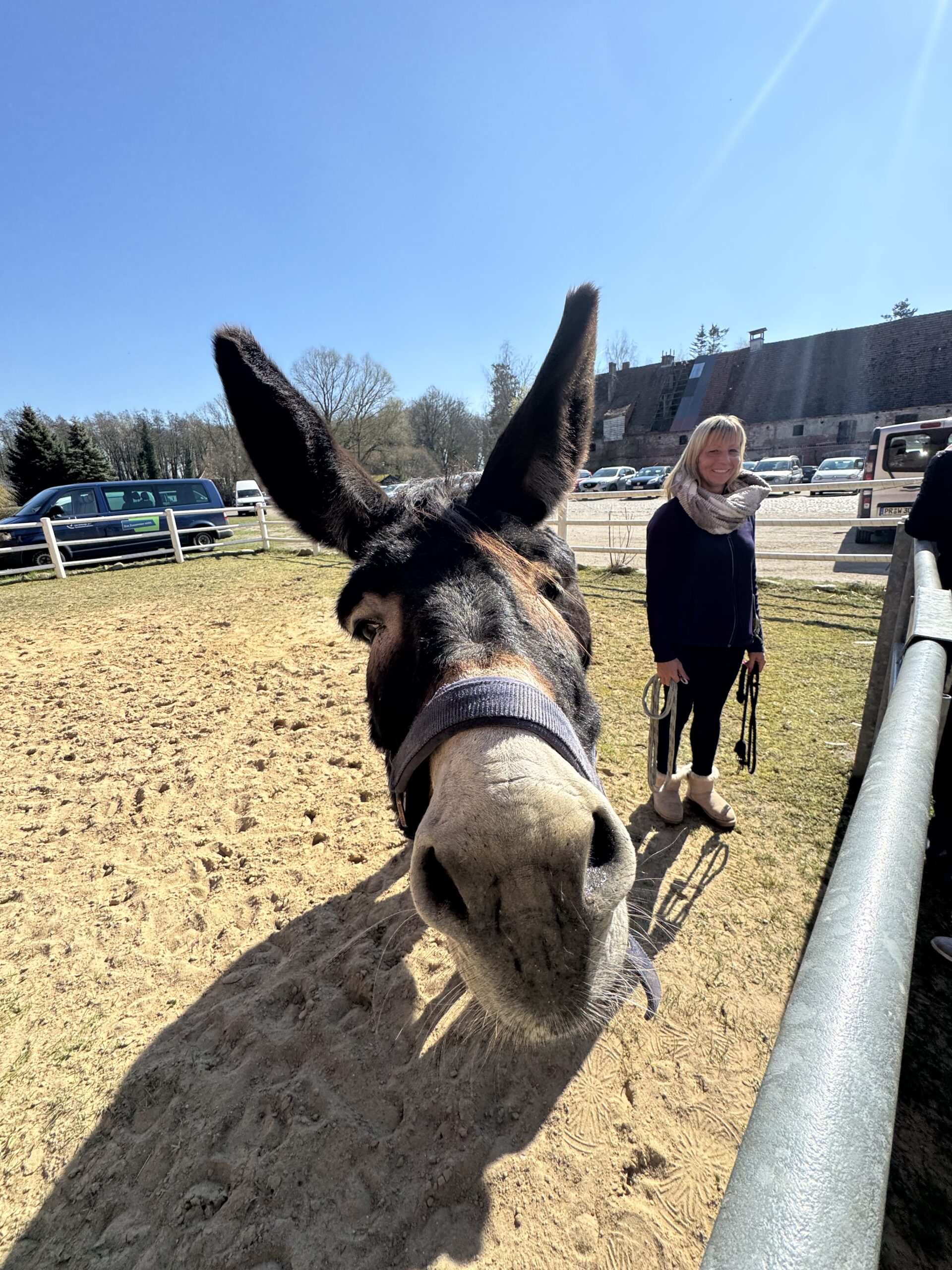
At our special needs school in Hoppenrade, children with diverse cognitive, emotional, or social needs face new challenges every day. For neurodiverse children—such as those with autism or attention disorders—traditional classroom settings can often feel overwhelming. Working with animals such as horses, donkeys, and llamas opens up new paths for learning, emotional growth, and social connection.
Malinka, Percy, Callie, Catrientje, Kleiner Donner, Hera, Balu, and Bruno live on the grounds of our school. They meet the children without prejudice. They do not judge, demand performance, or pretend—rather, they respond honestly to behavior and emotion. This direct and nonjudgmental feedback strengthens children’s self-confidence and ability to regulate their emotions. Research and practical experience show that animal-assisted education can foster concentration, empathy, and social skills.
Donkeys and llamas are particularly well suited for this work:
- Donkeys demand patience and empathy—those who try to force them achieve nothing. Children learn to act calmly and mindfully (Study)
- Llamas mirror emotions and respond sensitively to body language. This subtle feedback helps children become more aware of how they affect others and supports the development of trust.
Caring for the animals, leading them, or simply observing them creates learning spaces free from performance pressure. Children experience that their actions matter—when they lead calmly, the animal follows; when they show care, a bond forms. In this way, responsibility, mindfulness, and self-efficacy become tangible—key foundations for all effective learning.
Animal-assisted pedagogy thus combines relationship, movement, and nature experience—essential components for sustainable learning, especially for neurodiverse children. The educators responsible for the animals—Sabrina, Anja, and Udo—support the children and teachers through their therapeutic work with the animals. Lessons with llamas and donkeys are therefore not “just trips to nature” but a highly effective contribution to emotional and social development.
And when the children return to the classroom, they paint scenes of their time with the animals, giving emotional expression to their positive experiences once again.
Even among animals, there can be shifts in relationships within the herd. While writing this piece, we learned that Bruno the donkey has moved to another farm after repeatedly biting a pony. He has happily integrated into his new group—and the students in Hoppenrade are already looking forward to welcoming a new donkey into their care soon.